
Exploring Labuan Bajo and the Natural Wonders at the Western Tip of Flores
Exploring Labuan Bajo and the Natural Wonders at the Western Tip of Flores
Many travelers who join my tours usually ask the same question before arriving. What actually makes Labuan Bajo so special compared to other island destinations in Indonesia? It is a fair question. Indonesia is home to many beautiful coastal regions, from Raja Ampat to Lombok. However, after spending a few days exploring the islands around Labuan Bajo together, most visitors quickly understand why this destination has a character of its own.
Labuan Bajo is a small harbor town located at the western end of Flores in East Nusa Tenggara, Indonesia. The town serves as the main gateway to the renowned Komodo National Park. From this harbor, most journeys begin by boat, taking travelers across a network of islands scattered through the surrounding Flores Sea.
As a guide who has led many trips in this region, I often explain that the appeal of Labuan Bajo is not centered on a single attraction. Instead, the experience comes from a combination of islands, landscapes, and ecosystems that reveal themselves throughout the journey.
A Unique Geographic Setting
The waters around Labuan Bajo are filled with dozens of small islands, each with its own distinct landscape. During a single day of sailing, visitors may encounter dry savanna hills, white sand beaches, volcanic rock formations, and vibrant coral reefs.
Ocean currents flowing through this region bring nutrient rich water from deeper seas. These conditions support a diverse marine ecosystem, which is why snorkeling and diving are among the most popular activities for visitors.
The islands themselves also create a unique visual landscape. Unlike many tropical destinations dominated by dense forests, several islands near Labuan Bajo are covered in savanna grasslands. During the dry season, the hills turn golden brown, while in the rainy season the entire landscape becomes lush and green.
Komodo Island and the Habitat of an Ancient Reptile
One of the main reasons travelers visit this region is the chance to see the Komodo dragon in its natural environment. The largest populations of this species live on Komodo Island and Rinca Island, both located within Komodo National Park.
The Komodo dragon, scientifically known as Varanus komodoensis, is the largest lizard species in the world. When guiding trekking trips on these islands, I usually remind visitors that this experience is very different from seeing animals in a zoo. We are entering the natural habitat of a wild predator, so all activities follow the instructions of park rangers.
Treks on Komodo or Rinca Island generally last between one and two hours. In addition to Komodo dragons, visitors often encounter Timor deer, wild buffalo, and several species of savanna birds.
Padar Island and Its Iconic Island Panorama
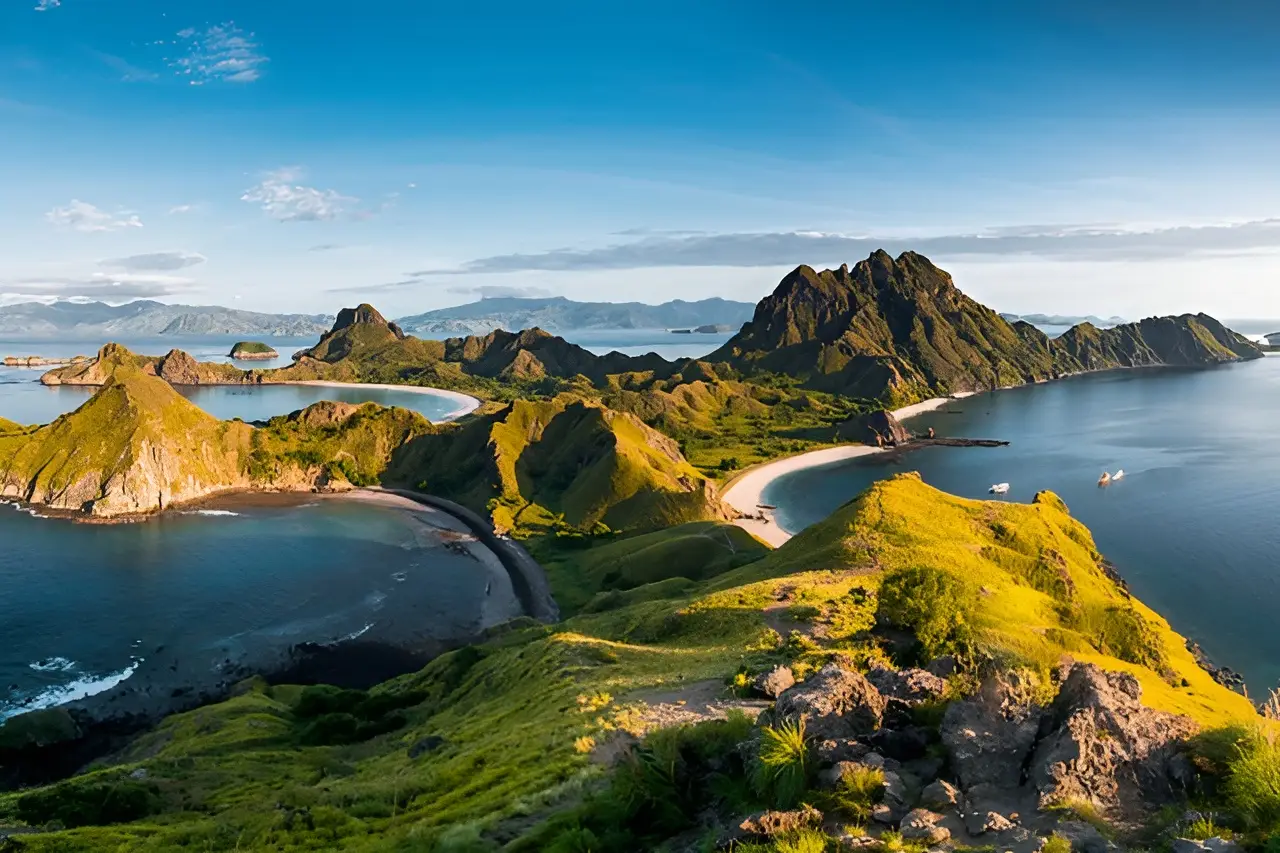
Another destination that is almost always included in the itinerary is Padar Island. This island is well known for its panoramic viewpoint overlooking three curved bays with different shades of sand.
The hike to the top of Padar Island is relatively short but steep in some sections. Most visitors choose to climb early in the morning or in the late afternoon. From the summit, the view reveals a dramatic arrangement of islands rising from the surrounding sea. For many travelers, this viewpoint becomes one of the most memorable moments of the entire trip.
Pink Beach and a Rare Coastal Phenomenon
One of the more unusual beaches in the area is Pink Beach. The sand appears pink because it contains fragments of microscopic marine organisms known as foraminifera that produce red pigments.
This beach is often used as a relaxing stop after trekking activities. The water is clear and calm enough for casual snorkeling, and the coral reefs nearby still support a healthy population of reef fish.
Snorkeling and Marine Life Encounters
For many visitors, the most impressive experiences around Labuan Bajo actually happen underwater. Several well known snorkeling sites include Manta Point and Taka Makassar.
At Manta Point, travelers often have the opportunity to observe manta rays gliding through the open water. These large rays gather in the area because of strong currents that bring abundant plankton.
Taka Makassar, on the other hand, is a narrow sandbar surrounded by shallow turquoise water. From the surface, visitors can often see coral formations and schools of fish moving through the reef.
Because ocean currents in this region can be strong, guides usually provide safety briefings before entering the water.
Sunset and the Flying Foxes of Kalong Island
One activity that often ends the day is visiting Kalong Island. This small island is home to thousands of fruit bats.
As sunset approaches, large groups of bats begin to leave the mangrove forest and fly toward Flores Island in search of food. Watching this migration from a boat while the sun sets over the sea is usually a quiet and memorable moment for many visitors.
Compared to busy resort areas, evenings in this part of the archipelago tend to feel calm and unhurried.
How Labuan Bajo Differs from Other Marine Destinations
When compared with destinations such as Raja Ampat or Lombok, Labuan Bajo offers a slightly different kind of travel experience.
Raja Ampat is globally recognized for its extraordinary marine biodiversity. Lombok combines beach tourism with strong cultural traditions. Labuan Bajo brings together several elements at once. Visitors can see an ancient reptile in the wild, hike across savanna landscapes, snorkel in nutrient rich waters, and travel between islands by boat within a relatively compact region.
This combination often makes the journey feel more like a small expedition rather than a typical beach vacation.
Best Time to Visit Labuan Bajo
In general, the best time to visit Labuan Bajo is between April and October when the weather is drier and sea conditions are calmer.
Travel during November through March is still possible, although the sea may occasionally become rough due to seasonal weather patterns.
Visitors who prefer greener landscapes often enjoy the period near the end of the rainy season, while those who appreciate the golden savanna scenery tend to visit during the dry months.
Practical Advice for Travelers
From my experience guiding many groups, there are several practical tips that can help visitors enjoy their trip more comfortably.
First, choose the type of tour that fits your travel style. Some travelers prefer a one day speedboat trip, while others enjoy multi day liveaboard journeys that allow more time to explore the islands.
Second, bring appropriate gear such as lightweight trekking shoes, a hat, and sun protection. Most activities take place in open environments with strong sunlight.
Third, always follow the instructions of park rangers when visiting Komodo habitats. These animals may appear slow, but they are still powerful predators that deserve respect and caution.
Conclusion
Labuan Bajo is not simply a single destination. It is the starting point for exploring one of Indonesia’s most remarkable island landscapes. From encountering Komodo dragons on Komodo Island, hiking the hills of Padar Island, to snorkeling in the clear waters of Komodo National Park, each journey through the region offers a different perspective on the natural diversity of eastern Indonesia.
After guiding many travelers here, I often notice the same reaction. Visitors arrive with curiosity, but they leave with a deeper appreciation for the landscapes and ecosystems that define this region. Labuan Bajo may not always offer the scale of large resort destinations, yet its authenticity, dramatic scenery, and varied wildlife create an experience that feels both personal and memorable for those who explore it.