
Discovering Melo Village with Seven Seas Group
The transition from the pristine marine environments of the Komodo National Park to the rugged highlands of western Flores represents one of the most rewarding journeys in the Indonesian archipelago. While the port town of Labuan Bajo serves as the primary maritime hub for luxury expeditions, the interior of Flores contains ancient cultural landscapes that remain largely untouched by coastal modernization. Nestled on the scenic ridges of the Liang Ndara district lies Melo Village, a traditional Manggarai settlement that serves as the premier cultural gateway to the island.
For travelers seeking a comprehensive understanding of Flores, combining a luxury voyage with overland cultural excursions provides the perfect balance of adventure and education. As part of the curated experiences offered by the Seven Seas Group, this comprehensive guide details the geographic, historical, and ritual dimensions of Melo Village, outlining how international travelers can engage with this highland community in a respectful, authentic, and memorable manner.
The Cultural Gateway to West Flores
The preservation of indigenous customs across Flores is deeply tied to the relative isolation of its mountain communities. While coastal settlements have historically engaged with foreign traders, the highland villages of the Manggarai people have maintained a social structure centered on agrarian cycles and ancestral veneration.
Melo Village acts as a vital bridge, allowing international visitors to move beyond the marine-focused itineraries of the region and engage directly with the human heritage of Flores. Through structured interactions managed by local cultural elders, the community shares its daily philosophies, artistic traditions, and architectural heritage. This active engagement with sustainable tourism serves a dual purpose: it provides a reliable source of income for the highland economy and instills a sense of cultural pride in the younger generation, who are trained from an early age to preserve these ancient customs.
Geographic Transition and Highland Climate Profile
The overland journey from coastal Labuan Bajo to the elevated ridges of Melo Village involves a rapid ascent through the shifting microclimates of West Flores. Situated approximately 17 kilometers east of the coast along the Trans-Flores highway, the route winds through dense bamboo groves, local fruit orchards, and terraced agricultural plots. This dramatic change in altitude creates a cool, misty highland environment that offers a refreshing contrast to the humid, tropical climate of the coast.
Geographic and Climatic Parameters | Coastal Labuan Bajo Hub | Highland Melo Village |
|---|---|---|
Elevation Above Sea Level | Sea Level | 624 Meters |
Temperature Range | 25°C to 32°C | 10°C to 20°C |
Humidity Levels | High coastal humidity | Crisp, cool mountain air |
Landscape Characteristics | Mangroves, dry savannah, marine bays | Bamboo groves, small forests, terraced rice fields |
Recommended Attire | Light, breathable resort wear | Layered clothing, windproof jacket, sturdy footwear |
This highland geography directly influences local agriculture. While coastal communities rely primarily on fishing and maritime trade, the residents of Melo cultivate high-quality coffee, mountain rice, and sugar palms (aren), utilizing traditional farming methods that respect the natural contours of the hills.
The Sacred Roots of Compang Toe Melo
The social and spiritual life of Melo Village is governed by the Compang To'e cultural cooperative. This collective represents a traditional system of communal governance that ensures tourism is developed in harmony with local custom (adat). The historical and layout elements of the village are deeply rooted in Manggarai cosmology, where physical structures mirror spiritual relationships.
At the physical and spiritual center of the village stands the Compang, a sacred stone altar. This stone platform serves as the central locus of communal cohesion and the primary space for ancestral offerings. In the Manggarai tradition, the ancestors are believed to reside in and around the compang, keeping watch over the moral and physical well-being of the villagers. The residential houses of the village are arranged concentrically around this stone altar, reinforcing the idea that all communal life radiates from this sacred center.
Historically, the Rumah Gendang (the communal clan house) represents the primary administrative and ceremonial building in the village. It is within this structure that the sacred drums (gendang) are kept, symbolizing the unity of the clan and the authority of the land trustees. While the introduction of cultural tourism has transformed some aspects of these sacred spaces into educational venues for international travelers, the core spiritual functions of the compang and the communal houses remain fully active, protected by strict local protocols.
The Ritual Mechanics of the Caci Whip Duel
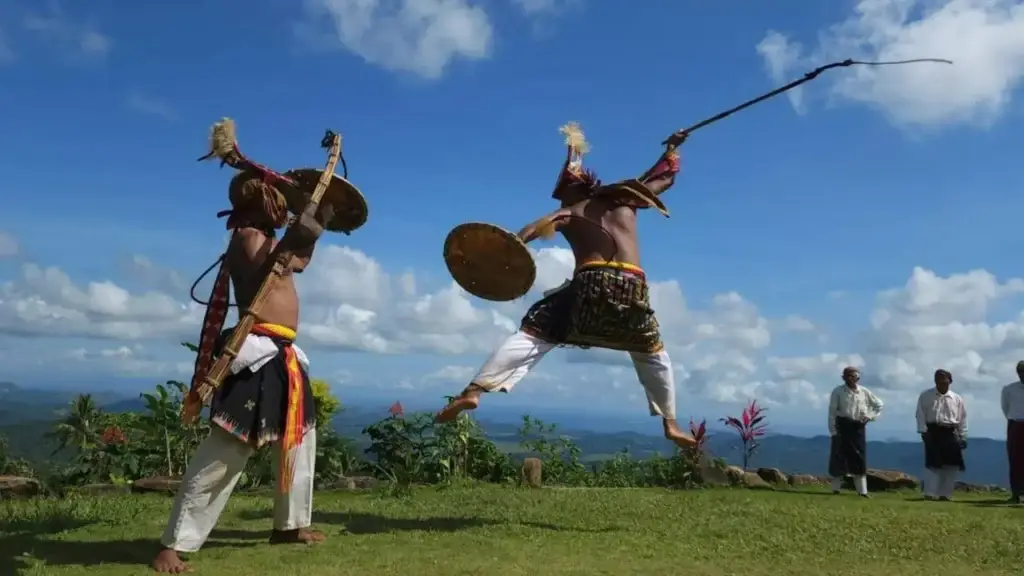
The most prominent cultural expression of the Manggarai people is the Caci dance, a ritual whip fight performed exclusively by men. The term Caci is derived from the Manggarai words ca (meaning "one") and ci (meaning "test"), highlighting the essence of the performance as a one-on-one trial of physical courage, athletic skill, and spiritual focus. The duel is structured as an alternate exchange of attack and defense between two adversaries, often representing different villages, which helps to foster friendly relations between neighboring communities.
The combat gear worn by Caci fighters is rich in symbolic meaning, reflecting a deep connection to nature and ancestral spirits.
Weapon or Armor Element | Traditional Material | Symbolic and Practical Function |
|---|---|---|
Whip (Larik) | Hard rattan with a leather-covered grip; sometimes palm stems | Represents the masculine force, the sky, and the paternal spirit |
Shield (Nggiling) | Sturdy buffalo hide stretched over a round bamboo or rattan frame | Represents the feminine womb, the earth, and maternal protection |
Helmet (Panggal) | Stiff buffalo hide wrapped in colorful cloth with two prominent horns | Protects the head from strikes; horns symbolize the strength of the water buffalo |
Mask and Cloth Coverings | Buffalo hide backing wrapped in hand-woven Songke textiles | Shields the face and neck from the swift, painful lash of the rattan whip |
Lower Attire (Songke) | Traditional hand-woven sarong worn over trousers | Showcases clan identity and ancestral patterns |
Hip Bells (Giring-giring) | Small brass or bronze bells strapped to the ankles and waist | Produces a sharp, rhythmic sound that accentuates the movement of the duel |
During the match, the aggressor uses the larik to strike the opponent's body, while the defender seeks to block the whip using the round nggiling shield and a defensive wooden stick held in the left hand. The upper torso remains bare, exposing the skin to the painful sting of the whip. While a strike to the face or head indicates an immediate defeat, a strike to the back is regarded as a positive sign.
According to ancient agricultural beliefs, the blood spilled during a Caci duel is an offering to the ancestors and the earth spirit. If blood falls upon the soil, it is viewed as a sign of future prosperity, indicating a highly successful harvest in the coming year. The intense, athletic duel is accompanied by the rhythmic beat of gongs and gendang drums, while village women perform the Tandak, a traditional choral chant that energizes the fighters and heightens the festive atmosphere. Historically utilized to settle territorial disputes, the Caci today serves as an artistic celebration of solidarity, physical fitness, and cultural identity.
Highland Hospitality, Crafts, and Local Products
Visiting Melo Village is a sensory experience defined by traditional highland hospitality. Upon arriving at the breezy ridge, visitors are greeted with a formal welcome ceremony led by the village elders. This initial greeting is cemented through the shared consumption of Sopi or Tuak, a traditional palm wine distilled from the sap of the local aren palm. Served in polished coconut shells, this local spirit is offered as a symbol of trust, respect, and mutual brotherhood.
Guests then gather in the "Panorama" Hut, a spacious bamboo pavilion that serves as the headquarters for the cultural cooperative, where they can enjoy hot, locally grown Flores coffee.
Beyond agricultural cultivation, the village is an important center for the preservation of Ikat weaving, a textile art passed down through generations of Manggarai women. Utilizing natural botanical dyes and hand-carved backstrap looms, local weavers create the intricate, geometric patterns of the Songke sarongs. These textiles are not merely decorative; the colors and motifs woven into each piece indicate the wearer's social standing and clan affiliation.
By purchasing these hand-woven textiles and packaged highland coffee directly from the weavers and farmers, international travelers contribute directly to the economic independence of the community, helping to preserve these heritage crafts.
During a standard cultural visit, travelers can also witness other traditional performance arts. These include the Tetek Alu, an energetic and rhythmic game where participants jump between moving bamboo poles swung close to the ground, and the Ndudu Dake dance, both of which emphasize physical coordination and communal harmony.
Seamless Integration with Seven Seas Luxury Liveaboard Itineraries
A highland land tour to Melo Village can be easily integrated into a luxury marine expedition through the Lesser Sunda Islands. Managed by the Seven Seas Group, these overland excursions provide a well-rounded travel experience, balancing marine exploration with cultural discovery.
The Seven Seas vessel is a magnificent 40-meter wooden schooner, built in the traditional Buginese Phinisi style from select Indonesian ironwood and teak. Offering eight spacious, air-conditioned en-suite cabins for up to 16 guests, the vessel is operated by a highly trained crew of 18, including professional cruise directors.
This integrated land tour provides a seamless transition from the marine environments of the national park to the high-altitude forests of the interior. By arranging private, air-conditioned transportation and professional English-speaking guides through the Seven Seas Group, guests can enjoy a comfortable and highly informative land tour.
The overland journey is perfectly timed to allow travelers to enjoy the cool highland morning in Melo Village before traveling to the coast to swim in the crystal-clear saltwater pool of Rangko Cave and watch the sunset from the scenic viewpoints of Amelia Hill.
Practical Travel Planning and Etiquette for International Visitors
To ensure a comfortable, safe, and culturally respectful visit to Melo Village, travelers should plan their journey in accordance with regional weather patterns and local customs. The climate of Flores is divided into two distinct seasons: a dry season dominated by cool winds from Australia, and a humid wet season characterized by short, intense rain showers.
Monthly Climate Guide for Flores | Average High / Low Temperature | Expected Rainy Days | Travel Planning Recommendations |
|---|---|---|---|
January | 31°C / 25°C | 24 Days | Wet season; high humidity; occasional overland travel delays |
February | 31°C / 25°C | 24 Days | Wet season; rougher southern seas; lush green landscapes |
March | 31°C / 25°C | 23 Days | Transition period; frequent afternoon rain showers |
April | 32°C / 25°C | 13 Days | Beginning of dry season; clear skies; ideal for trekking |
May | 31°C / 25°C | 4 Days | Dry season; excellent visibility; comfortable temperatures |
June | 30°C / 24°C | 0 Days | Dry season; cool southern winds; low humidity |
July | 30°C / 22°C | 1 Day | Coolest month; highly recommended for mountain trekking |
August | 30°C / 22°C | 1 Day | Peak dry season; arid landscapes; very reliable weather |
September | 30°C / 22°C | 0 Days | Dry season; comfortable temperatures; fewer tourist crowds |
October | 31°C / 23°C | 1 Day | Late dry season; warm waters; transition to rain |
November | 32°C / 25°C | 9 Days | Transition period; occasional rain; greening of the hills |
December | 32°C / 26°C | 26 Days | Monsoonal rain; high vegetation growth; excellent waterfalls |
The period from April to October represents the ideal travel window, offering dry, sunny days that are highly suitable for outdoor land tours and trekking across the island.
To maintain respectful interactions with the local community, international visitors should observe the following guidelines:
Dress Modestly: Although Labuan Bajo is accustomed to beachwear, highland communities prefer modest attire. Visitors should ensure that shoulders and knees are covered when walking through the village or participating in welcome ceremonies.
Accept Offerings Graciously: When presented with Sopi or local coffee, accepting the cup with both hands is a sign of respect. Even if one chooses not to drink the palm liquor, taking a polite sip is viewed as a warm acceptance of local brotherhood.
Ask Permission Before Photographing: While the village is highly photogenic, visitors should always ask permission before taking close-up portraits of the elders, children, or weaving artisans.
Support the Local Economy: When purchasing Ikat textiles, hand-crafted souvenirs, or local coffee, visitors should pay fair prices, recognizing the considerable time and skill required to produce these handmade goods.
Prepare for the Climate: Given the sharp drop in temperature in the late afternoon, carrying a lightweight jacket, windbreaker, or long-sleeved shirt is highly recommended, especially for sunset excursions. Sturdy, closed-toe walking shoes are essential for navigating the sloping paths of the village.
Strategic Conclusions for Cultural Immersion
The inclusion of Melo Village in a Flores overland itinerary provides a vital perspective on the region, highlighting the deep cultural traditions of the Manggarai people. By stepping away from the coast, travelers can engage with a community that has preserved its customs, rituals, and identity for generations. Through direct support of local cultural cooperatives, sustainable tourism helps to preserve these ancient practices, ensuring they continue to thrive.
When coordinated alongside a luxury cruise with the Seven Seas Group, this land tour offers a seamless, deeply educational journey through the natural and human landscapes of East Nusa Tenggara, creating memories that will last a lifetime.