
Complete Guide to Goa Rangko for International Travelers
The coastal town of Labuan Bajo, situated on the western edge of Flores Island, serves as the premier gateway to Indonesia's legendary Komodo National Park. While international travelers frequently arrive to witness the famous Komodo dragons and dive in world-class marine reserves, the mainland of Flores holds equally spectacular natural anomalies. For discerning explorers seeking to combine raw, untouched wilderness with the highest standards of maritime luxury, the professional expedition leaders at The Seven Seas Group recommend a journey to the mystical cavern of Goa Rangko.
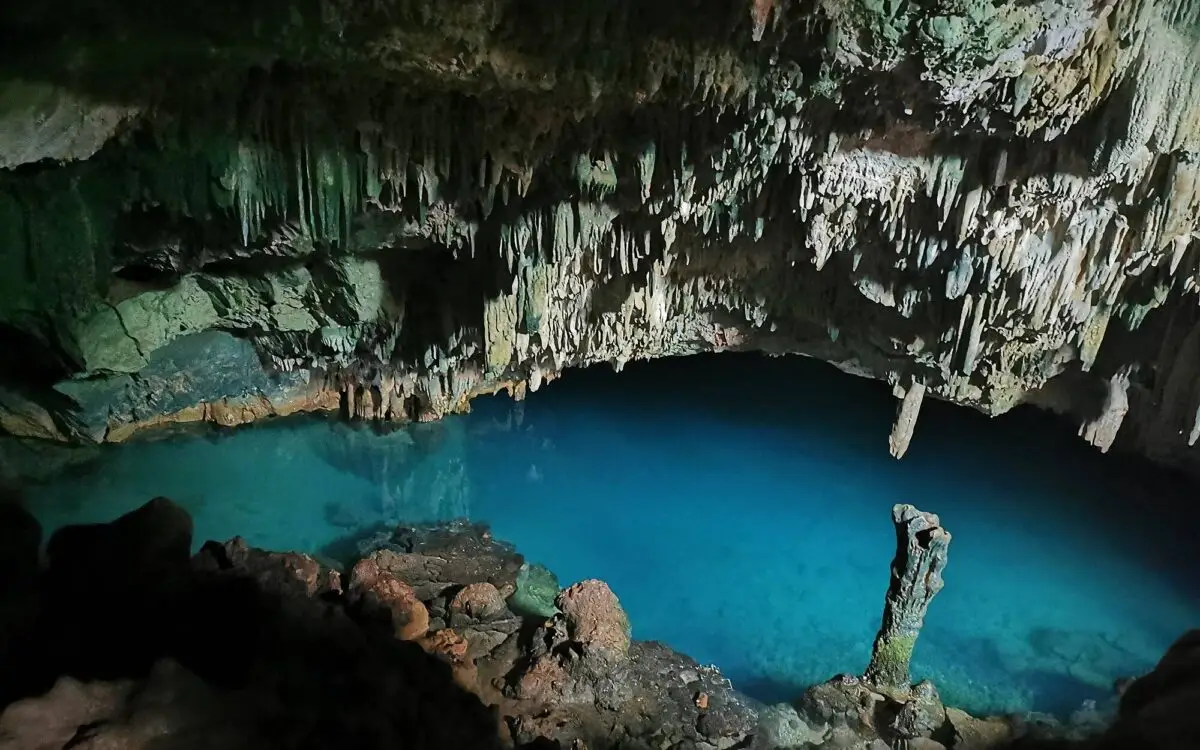
Located slightly north of Labuan Bajo near the quiet coastal settlement of Rangko Village, Goa Rangko is a stunning limestone sea cave renowned for its subterranean, crystal-clear blue saltwater pool. This hidden sanctuary offers a refreshing contrast to typical island-hopping itineraries, allowing visitors to float in mineral-rich, glowing turquoise waters surrounded by ancient geological formations. To assist international travelers in navigating this extraordinary destination, this comprehensive guide outlines the geological science, operational logistics, safety standards, and regional highlights of the cavern.
The Geological Marvel of the Goa Rangko Cavern
Goa Rangko is a classic example of coastal karst topography, formed over millions of years through the chemical dissolution of soluble limestone bedrock by acidic rainwater and marine activity. Unlike inland freshwater caves, Goa Rangko is a tidal sea cave, meaning its subterranean basin is directly connected to the neighboring ocean. This continuous hydrological exchange keeps the pool filled with exceptionally clean, clear saltwater, creating a unique brackish environment. Because the water contains a high concentration of dissolved minerals and salts, it possesses an elevated density that increases buoyancy, allowing swimmers to float effortlessly on the surface with minimal physical exertion.
The defining visual highlight of Goa Rangko is its brilliant optical transformation, often described as the glowing pool effect. For much of the day, the cave remains shrouded in cool shadows, emphasizing the dramatic, textured stalactites hanging from the low ceilings. However, during a specific midday window, the sun reaches the precise angle required to shine directly through the cave's narrow ground entrance. This incoming sunlight acts as a natural spotlight, refracting through the ultra-clear saltwater and illuminating the entire cavern in a vibrant, glowing turquoise hue. The water is so transparent that the underwater topography, including submerged limestone shelves and small, adapted fish, remains fully visible from the water's edge.
Detailed Travel Logistics to Goa Rangko
Reaching the secluded enclave of Goa Rangko requires a coordinated transition between land transport and sea travel. The journey begins in Labuan Bajo, which is easily accessible via a short 1-hour and 10-minute flight from Ngurah Rai International Airport in Denpasar, Bali. From Labuan Bajo, travelers can choose between a fully guided excursion or an independent journey, both of which require traversing the scenic coastline to Rangko Village.
Stage of Journey | Mode of Transport | Approximate Duration | Key Operational Details |
|---|---|---|---|
Labuan Bajo to Rangko Village | Private air-conditioned car or rented scooter | 30 to 45 minutes | Distance is approximately 14 kilometers; the coastal road is generally paved but can feature bumpy, uneven sections. |
Rangko Village to Cave Jetty | Traditional wooden outrigger boat | 15 to 20 minutes | Chartered from local boatmen; these rustic vessels accommodate up to 5 to 7 passengers and feature loud, characteristic engines. |
Jetty to Goa Rangko Entrance | Guided walk through coastal forest | 5 to 15 minutes | A short, scenic path winding past a white sandy beach and a small tropical grove. |
For travelers prioritizing comfort, renting a direct boat from the main harbor of Labuan Bajo to the cave's beach is also possible, taking approximately 50 to 70 minutes along the coastline, though this method incurs a higher overall cost than the land-and-sea combination.
Operational Parameters and Cost Structures
To ensure a seamless travel experience, visitors must familiarize themselves with the local cost structures, entrance fees, and optimal times of day for exploration.
Operational Element | Standard Specification | Strategic Travel Notes |
|---|---|---|
Cave Entrance Fee | 50,000 IDR (Approx. 3 USD) | Paid at the small ticket booth located on the beach pier upon arrival. |
Outrigger Boat Charter | 200,000 to 400,000 IDR per boat | Round-trip charter where the boatman waits at the beach while guests explore the cave; prices are subject to negotiation. |
Daily Opening Hours | 06:30 AM to 06:00 PM | Open daily, including national holidays, though late afternoon visits lose natural illumination. |
Best Time of Day | 12:00 PM to 03:30 PM | The critical daily window when sunlight penetrates the cave mouth to illuminate the turquoise pool. |
Best Season of Year | April to September (Dry Season) | Offers the lowest rainfall, most stable weather conditions, and highest underwater visibility. |
For those comparing tour styles, booking a structured half-day tour from Labuan Bajo offers significant convenience, whereas independent travel allows for a highly flexible, self-paced itinerary.
Tour Category | Average Cost per Person | Inclusions and Logistic Arrangements |
|---|---|---|
Guided Half-Day Tour | USD 45 to USD 46 | Includes private hotel transfers in an air-conditioned car, a chartered outrigger boat, all entrance fees, mineral water, and a local English-speaking guide. |
Independent Travel | USD 36 | Includes a daily scooter rental (approx. USD 10), a privately negotiated boat charter (approx. USD 23), and the individual cave entrance fee (approx. USD 3). |
Safety Protocols and Essential Packing Guide
The subterranean environment of Goa Rangko is highly rewarding, but its natural state presents specific physical challenges. The cave entrance is a modest 2 x 3-meter opening in the ground, requiring visitors to descend down wet, calcite steps. To ensure physical safety, a sturdy wooden railing is installed, but extreme caution is required to prevent slipping on the damp stone surfaces. Additionally, the interior of the cave is highly humid, with water continuously dripping from the ceiling stalactites, which can damage unprotected electronics.
Once inside, swimmers will find that the pool averages 3 to 4 meters in depth, meaning non-swimmers must utilize life jackets, which are typically provided by chartered tour boats. For the more adventurous, a prominent, pole-like stalagmite rises near the pool's edge, serving as a natural platform for jumping into the deep water. However, divers must exercise caution and verify water levels before jumping to avoid hitting submerged rocks. Furthermore, visitors should be aware that cellular reception is entirely non-existent once inside the cavern, making self-reliance and traveling with a guide highly recommended.
To prepare for these conditions, travelers are advised to pack according to the following checklist.
Required Gear | Primary Function | Professional Guiding Recommendation |
|---|---|---|
Water Shoes or Non-Slip Footwear | Preventing slips on wet calcite steps | Standard flip-flops do not provide adequate traction on slippery limestone. |
Swimwear | Floating in the saltwater pool | It is highly recommended to wear swimwear under light clothing, as changing facilities at the cave are basic or non-existent. |
Dry Bag | Protecting electronics from humidity | Essential for safeguarding cameras, smartphones, and dry clothes from dripping cave water and sea splashes during the boat ride. |
Quick-Dry Towel | Drying off in a humid environment | Lightweight, fast-drying microfiber towels are ideal for active travel. |
Small Denominations of Cash | Paying local fees and tipping | ATMs are completely unavailable in Rangko Village, so having local currency is mandatory. |
Sun Protection | Preventing sunburn during transit | Sunscreen, sunglasses, and a wide-brimmed hat are essential for the open outrigger boat ride. |
Enriching the Excursion with Surrounding Landmarks
A trip to Goa Rangko can easily be combined with several nearby attractions to create a highly enriching, full-day itinerary on the mainland of Flores.
Pasir Timbul Sandbar
Located a mere 5-minute boat ride from the cave's beach jetty is Pasir Timbul, a pristine white sandbar emerging directly from the ocean near Gusung Island. This dynamic geological feature is heavily influenced by local tides; at low tide, it stretches out in a beautiful crescent shape, while at high tide, it shrinks into a tiny, minimalist disc of pure white sand. It is a spectacular stop for swimming, snorkeling among shallow corals, and capturing stunning aerial photographs. Visitors can easily arrange a brief stop here by paying an additional 50,000 to 100,000 IDR directly to their local boatman.
Bukit Sylvia
To conclude a day of coastal exploration, travelers often head to Bukit Sylvia, also known as Sylvia Hill, located near Labuan Bajo. This vantage point features steep, rolling grassy hills that offer a spectacular 360-degree panoramic view of the surrounding islands, quiet bays, and ocean channels. Arriving in the late afternoon allows visitors to watch a magnificent sunset as the sun dips below the volcanic islands of the Komodo National Park, providing a dramatic end to the journey.
Gua Batu Cermin
For those fascinated by regional geology, Gua Batu Cermin, or the Mirror Cave, is an easily accessible canyon located just 15 minutes from the center of Labuan Bajo. This 75-meter-high limestone cave system is famous for its highly reflective rock walls, which shine like mirrors when sunlight filters through the canyon crevasses at the correct angle. Inside, visitors can observe ancient marine fossils of turtles, corals, and fish embedded directly into the stone walls, serving as clear geological evidence that the entire landmass of western Flores was once submerged deep beneath the ocean.
Wae Bobok Ecotourism
Positioned along the overland route between Labuan Bajo and the northern villages is Wae Bobok Ecotourism, a protected forest area that serves as a scenic culinary and photography stopover. Established in 2017 by the Forest Management Unit of West Manggarai, this site is rich in local culture. According to local legend, the name is derived from the Manggarai words "Wae," meaning water, and "Bobok" or "Bobon," meaning God, translating directly to the "Water God," which refers to the natural springs that sustain the surrounding agricultural communities.
The Luxury Liveaboard Connection with The Seven Seas Group
While exploring the rugged, untamed landscapes of Flores Island provides an incredible adventure, returning to a world of sophisticated comfort is paramount for luxury travelers. The Seven Seas Group, a premier maritime expedition service in the Indonesian archipelago, specializes in bridging the gap between raw natural exploration and refined relaxation. Operating the MV Seven Seas, a luxurious 40-meter traditionally built Buginese schooner, the group offers unparalleled access to the region's most secluded destinations.
The MV Seven Seas comfortably accommodates up to 16 passengers in 8 air-conditioned staterooms, each equipped with private ensuite bathrooms and hot water showers. With a nearly 1:1 crew-to-guest ratio, including 20 highly trained crew members and 2 experienced cruise directors, every detail of the voyage is managed with meticulous care. An onboard professional chef prepares gourmet meals complemented by a selection of fine wines, while spacious sundecks and shaded lounge areas provide the perfect environments for post-expedition relaxation.
For guests sailing aboard the MV Seven Seas, a shore excursion to Goa Rangko is seamlessly integrated into custom, bespoke itineraries. By coordinating private air-conditioned land transfers, chartered tenders, and professional guides, the expedition team ensures that guests experience the magical, glowing turquoise waters of the cave without any of the logistical stress of independent travel. This elite level of service allows international travelers to fully immerse themselves in the quiet, mysterious beauty of Flores, creating life-defining memories on the horizon.