
10 Best Labuan Bajo Traditional Cuisine Recommendations
After spending more than a decade leading expeditions through the rugged landscapes of Komodo National Park, I have seen thousands of travelers fall in love with our sunsets. However, the ones who truly connect with this land are those who sit down at a local wooden table and dive into a plate of Labuan Bajo traditional cuisine. As a professional guide, I have learned that while the dragons bring people here, it is the honesty of our food that makes them want to stay.
Many visitors make the mistake of sticking to familiar hotel pastas or generic club sandwiches. They miss out on the incredible culinary dialogue between the salty Flores Sea and the fertile Manggarai highlands. My job is to ensure you don’t make that mistake. In this guide, I will share the specific, authentic dishes that define our home, based on years of eating with local fishermen and traditional cooks who treat every ingredient with immense respect.
Understanding the Roots of Flores Island Culinary Identity
The food culture in this corner of Indonesia is a beautiful contradiction of simplicity and depth. Because Labuan Bajo was historically a small fishing village that served as a gateway to the mountains, our kitchen is divided into two worlds: the fresh, mineral-rich bounty of the ocean and the earthy, bitter, and spice-heavy produce of the inland. When you eat Labuan Bajo traditional cuisine, you are tasting a geography that spans from coral reefs to volcanic soil.
In my ten years on the field, I have observed that our best dishes do not rely on heavy sauces or complex marinades. We let the freshness speak. If an inhabitant of Bajo catches a snapper at 5:00 AM, that fish is on a charcoal grill by noon, seasoned with nothing more than sea salt, lime, and perhaps a smear of bird's eye chili. This "less is more" philosophy is what defines the local palate and provides a clean, energetic dining experience that won't weigh you down during your island-hopping adventures.
Ikan Kuah Asam The Ultimate Morning Recovery Soup
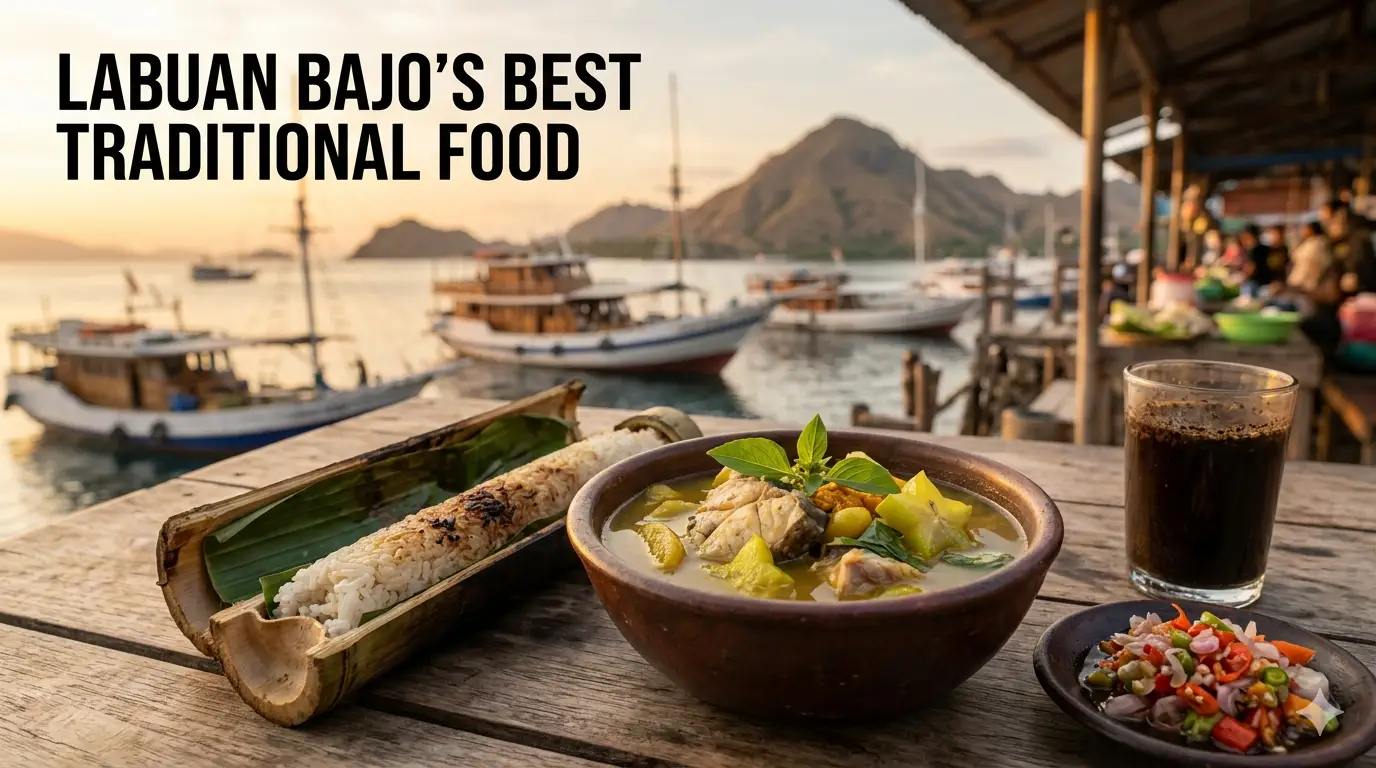
If there is one dish that represents the soul of the harbor, it is Ikan Kuah Asam. This is a clear, yellowish fish soup that is the gold standard of Labuan Bajo traditional cuisine. Local boat captains often eat this before a long day at sea because it is incredibly hydrating and sharp. We use fresh grouper or red snapper submerged in a broth infused with turmeric, ginger, and lemongrass.
The defining characteristic of a true Kuah Asam is the use of belimbing wuluh (starfruit) or young tamarind. It provides a bright, citrusy acidity that cuts through the richness of the fish without being overwhelming. From my experience, travelers who are feeling a bit "sun-drained" after a day at Padar Island find this soup to be a literal life-saver. It is light, fragrant, and carries the scent of the ocean in every spoonful.
Rumpu Rampe A Masterclass in Balancing Bitterness
Vegetarians often worry about finding variety here, but Rumpu Rampe usually becomes their favorite discovery. This dish is a stir-fry of papaya flowers, cassava leaves, and heart of banana. To the uninitiated, the idea of eating papaya flowers sounds bitter and unappealing. However, the local Manggarai technique involves blanching the flowers with clay or guava leaves to neutralize the harshness, leaving behind a sophisticated, slightly nutty bitterness.
I always tell my guests that Rumpu Rampe is the perfect "reset button" for the palate. It is savory, crunchy, and packed with nutrients. It is almost always served alongside grilled fish and a side of red rice. When you see a local guide eating, I guarantee there is a pile of Rumpu Rampe on their plate—it is our secret to staying healthy and energized in the tropical heat.
Kolo The Sacred Art of Bamboo Grilled Rice
For something truly special, you must look for Kolo. This is not your average steamed rice; it is a labor of love. We take local grains, season them with a blend of secret mountain spices, and pack them into young bamboo poles lined with banana leaves. These poles are then leaned over an open wood fire and turned slowly for hours.
The result is a cylinder of rice that has absorbed the smoky, woody aroma of the bamboo and the floral sweetness of the banana leaf. The texture is slightly sticky, almost like a savory cake. Kolo was traditionally a ceremonial food, but today it is a staple of Labuan Bajo traditional cuisine that you can find at local markets. Tearing into a warm piece of Kolo while watching the boats return to the harbor is, in my opinion, one of the most atmospheric dining experiences you can have in Indonesia.
How to Navigate the Labuan Bajo Food Scene Like a Professional
The rapid growth of the tourism industry in 2026 has brought many "fusion" restaurants to the main street. While some are excellent, they often dilute the authentic experience. To find the real Labuan Bajo traditional cuisine, you need to understand the rhythm of the town. We are a community that follows the sun. The best food happens early in the morning at the markets or late at night by the water.
One observation I have made over a decade is that the best food is rarely found where the menus are translated into five different languages with glossy photos. Look for the places where the locals are queuing. Look for the places where the fish is still on ice right next to the grill. Don't be afraid of the "hole-in-the-wall" spots; that is where the grandmothers are in the kitchen, and that is where the magic happens.
Midnight Cravings at the Kampung Ujung Waterfront
When the sun goes down, the entire town gravitates toward Kampung Ujung. This is a long stretch of waterfront stalls dedicated entirely to seafood. It is chaotic, smoky, and absolutely brilliant. My tip for choosing the right stall is simple: look at the eyes of the fish. If they are bulging and crystal clear, that fish was in the ocean 12 hours ago. If they are cloudy or sunken, keep walking.
The "Bajo Style" of grilling involves a very hot fire and a simple basting of oil and a little chili. Avoid stalls that pre-cook their fish and just reheat them. You want to see your selection go from the ice tray to the fire. Pair your fish with Sambal Dabu-Dabu—a raw salsa of chilies, shallots, and green tomatoes—and you will understand why I have stayed in this town for over ten years.
The Manggarai Coffee Culture and Afternoon Rituals
You cannot talk about Labuan Bajo traditional cuisine without mentioning the coffee. The highlands of Manggarai produce some of the most sought-after beans in the world. In town, we drink it "Tubruk" style—coarse grounds at the bottom of the cup, thick and dark. It is an intense experience that locals use to punctuate their afternoons.
The best way to enjoy this is with a side of Rebok, a traditional snack made from roasted rice flour and grated coconut. It’s dry and crumbly, which makes it the perfect companion for a strong cup of coffee. I often take my guests to a small, unassuming coffee shop tucked away from the main road where the old sailors sit and talk. It’s the best place to feel the pulse of the town away from the tourist crowds.
Essential Advice for Your Culinary Adventure
To make the most of your food journey, keep these professional insights in mind:
Respect the Chili: Our local bird's eye chilies are small but carry a punch that can surprise even experienced spice lovers. Always ask for the sambal on the side first.
The Seasonal Rule: Some fish are better in certain months depending on the currents. Ask your server, "What is the catch of the day?" rather than ordering from the menu blindly.
Hydration is Key: Our food can be salty and spicy. Always pair your meals with fresh coconut water, which is available everywhere and helps balance the heat.
Cash is King: While major restaurants take cards, the most authentic Labuan Bajo traditional cuisine spots are cash-only or use local QR codes. Keep some small bills on you.
Conclusion
Dining in our town is not just about nutrition; it is an act of storytelling. Every bowl of Kuah Asam and every piece of Kolo reflects the resilience and the vibrant spirit of the people of Flores. As a guide who has seen this town transform, I urge you to look past the modern facades and seek out these traditional flavors.
When you taste the authentic Labuan Bajo traditional cuisine, you aren't just a tourist anymore—you become a guest of our island. Take the time to explore the markets, talk to the vendors, and eat with your hands when appropriate. The beauty of Labuan Bajo is found in its rugged hills, but its heart is found in its kitchen.